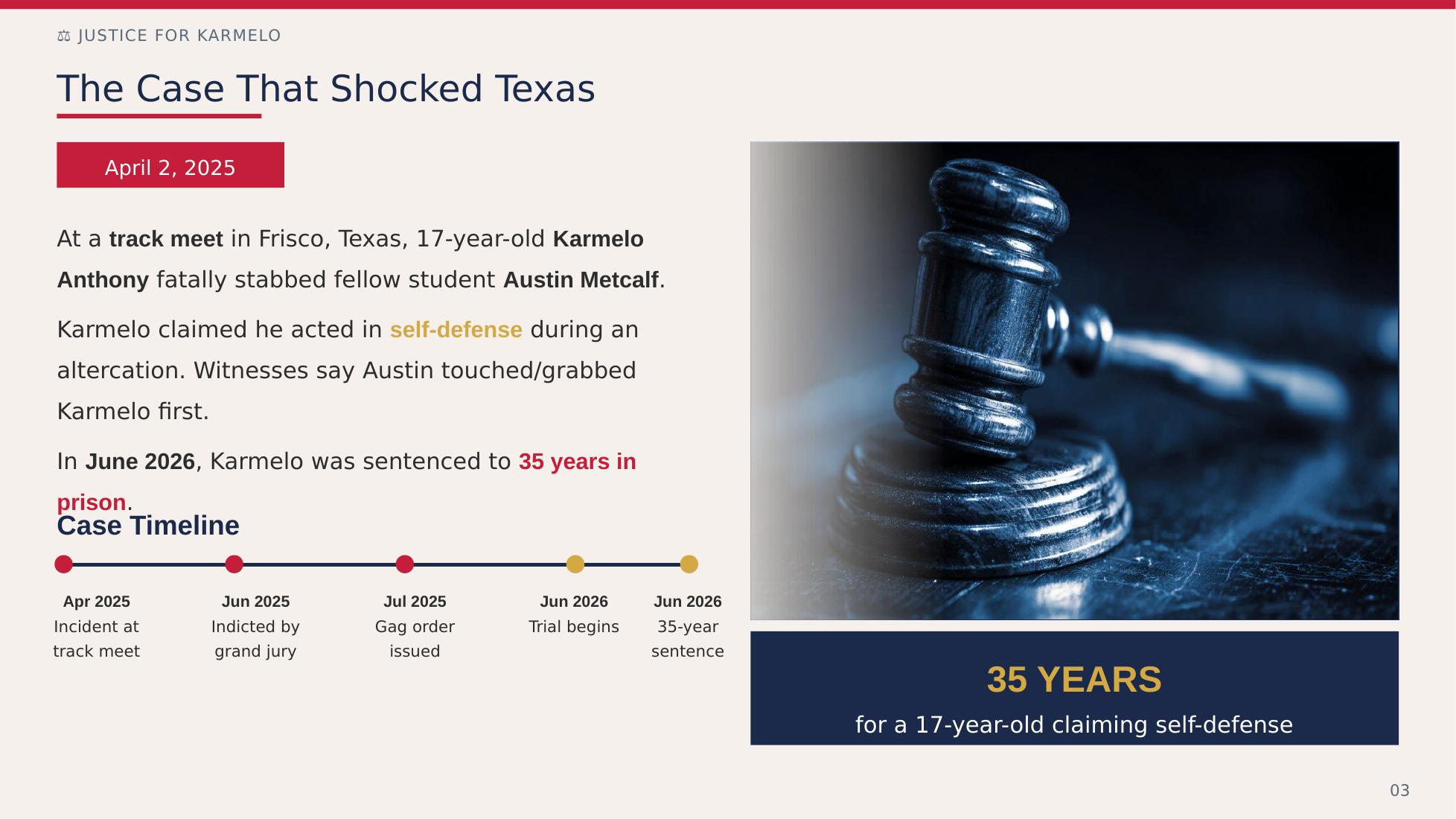
On April 2, 2025, a fatal altercation broke out between students at a UIL track meet in Frisco, Texas. Karmelo Anthony, then 17, was arrested at the scene and charged with first-degree murder.
Incident took place under a team tent during a rain delay
Witnesses describe an escalating verbal confrontation before any contact
Karmelo was a minor with no prior criminal history
02The Self-Defense Claim
Karmelo's defense has consistently maintained the stabbing was a defensive reaction after he was physically confronted and grabbed. Texas law (Penal Code §9.31–9.32) recognizes a presumption of reasonable belief in deadly-force self-defense in specific circumstances.
Defense argues Karmelo was told to move and was then physically grabbed
He had no duty to retreat under Texas "stand your ground" provisions if lawfully present
Advocates argue the jury was not properly instructed on the §9.32 presumption
03Evidentiary Issues
The slideshow analysis flags multiple evidentiary problems advocates believe should have triggered a mistrial: inconsistent eyewitness statements, missing video angles, and pre-trial publicity that may have tainted the jury pool.
Conflicting statements between adult coaches and student witnesses
Stadium video coverage with disputed gaps at the moment of contact
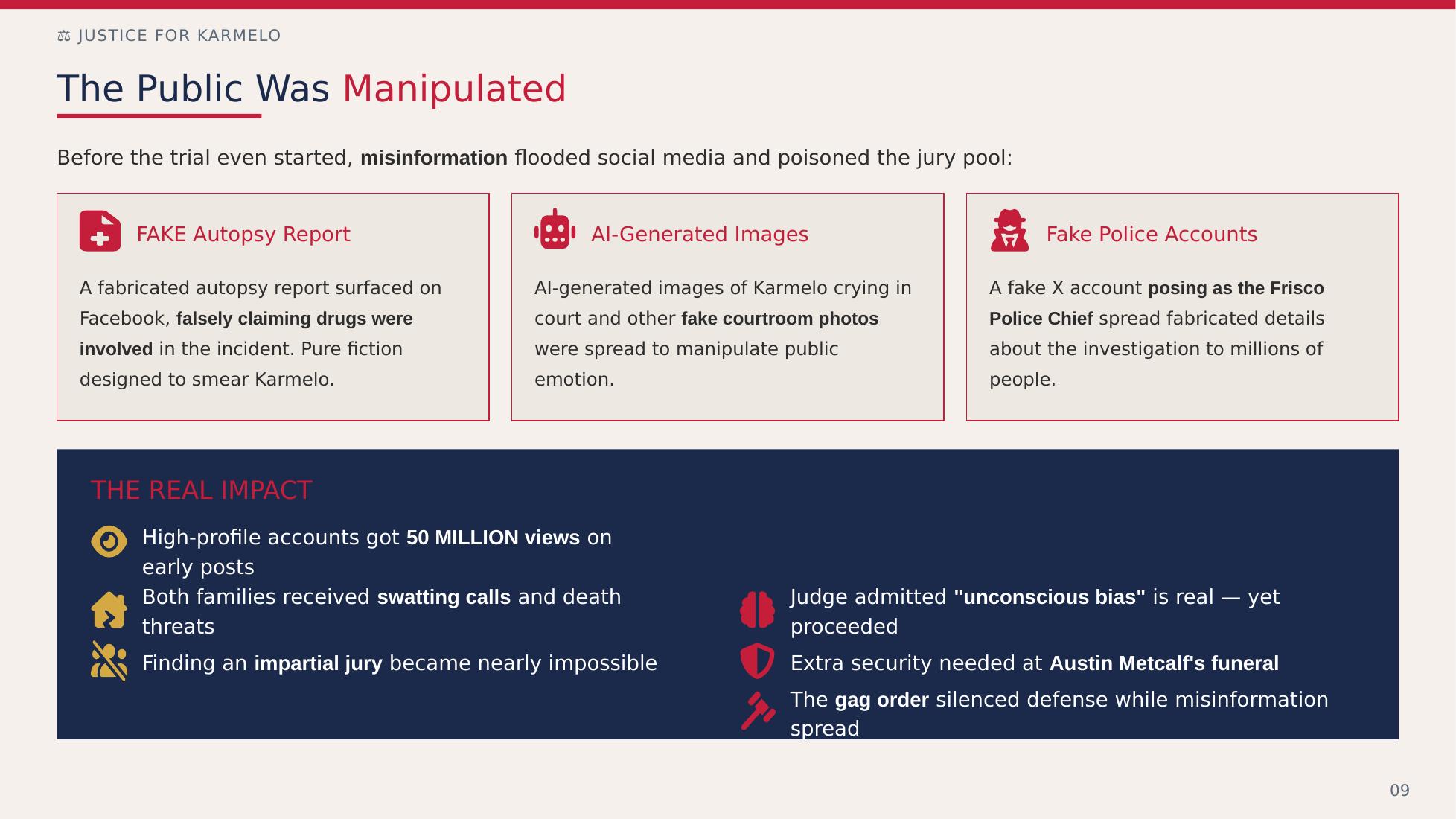
Months of viral social-media commentary before voir dire
04Jury Bias & Venue
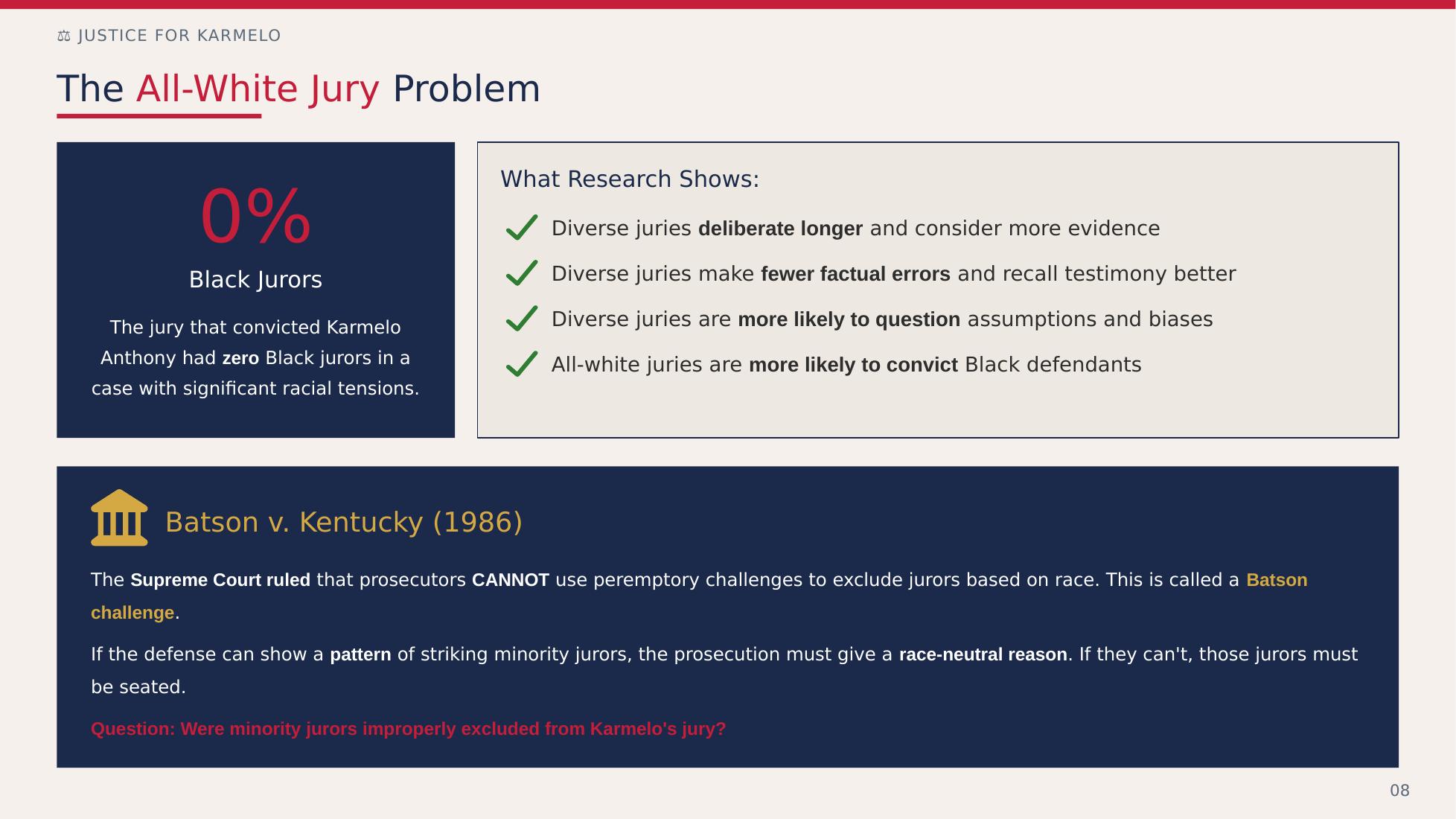
The case generated national attention and racially-charged commentary online for nearly a year before trial. Defense advocates argue a change of venue or an extended voir dire was warranted to seat an impartial jury in Collin County.
Pre-trial polling showed widespread prior knowledge of the case
Public fundraising on both sides ran into the hundreds of thousands of dollars
Motions for venue change were denied; advocates call this reversible error
05Constitutional Violations
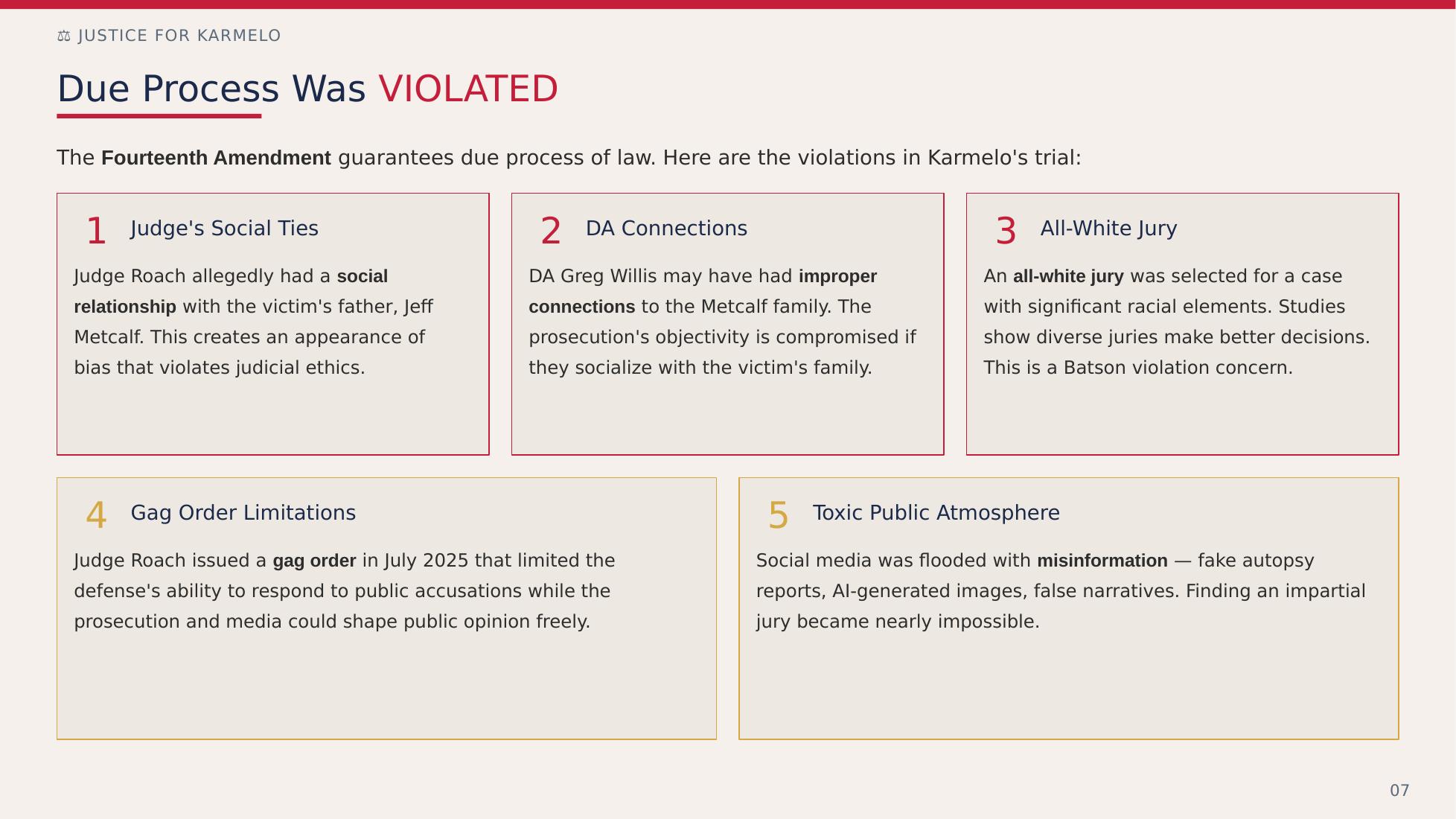
The analysis argues several rulings during trial implicated Karmelo's Sixth Amendment right to a fair trial and effective cross-examination, and his Fourteenth Amendment right to due process.
Limits placed on cross-examination of key state witnesses
Admission of prejudicial character evidence over defense objection
Jury instructions on self-defense that allegedly understated the §9.32 presumption
06The Sentence
On June 9, 2026, Karmelo — now 19 — was sentenced to 35 years in the Texas Department of Criminal Justice. He is parole-eligible in 2043 and held at the PACK I unit.
First-time offender; sentenced as an adult
Sentence places him in custody until at least age 37
Projected release: May 27, 2061
07The Call for a Mistrial
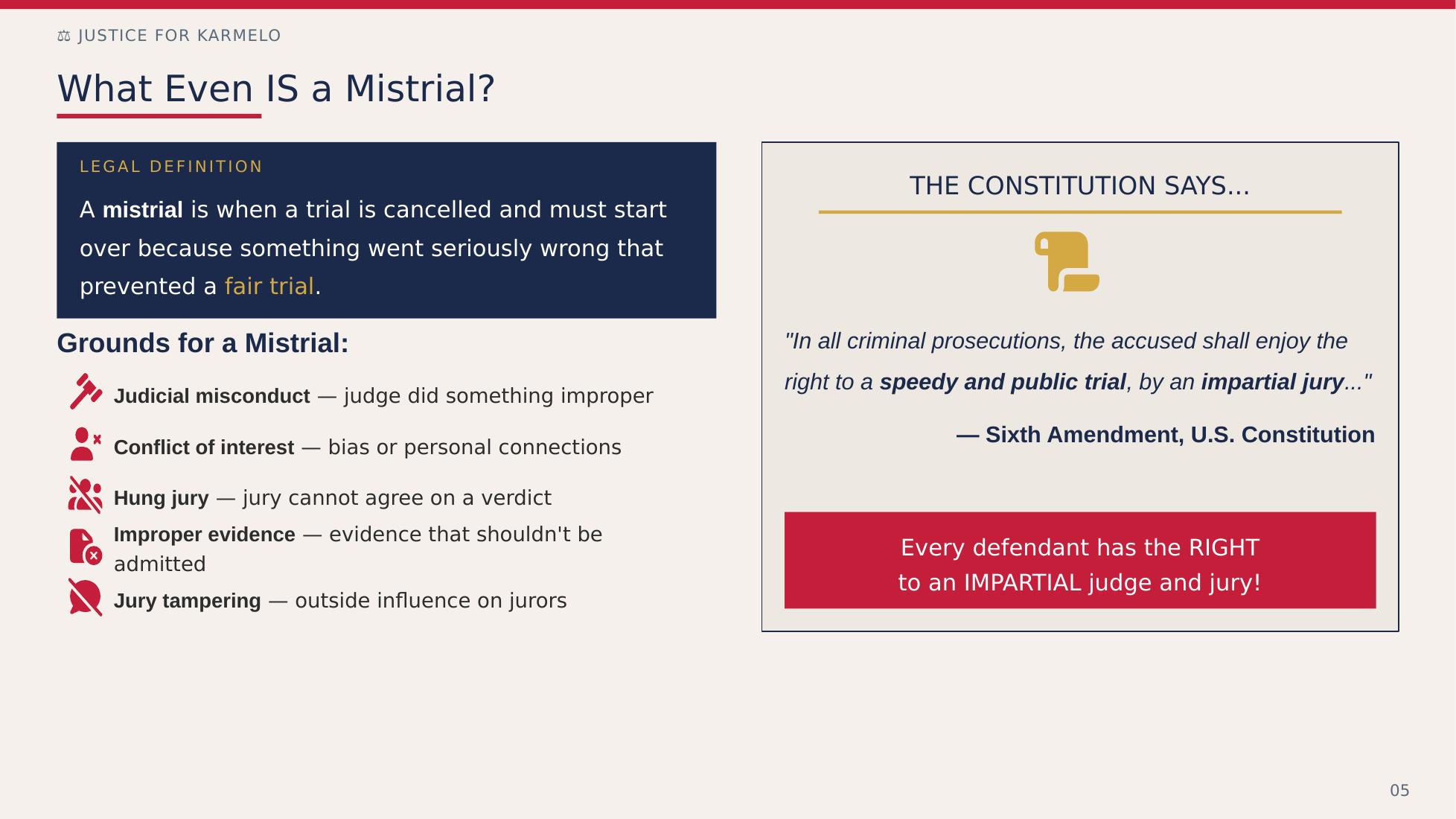
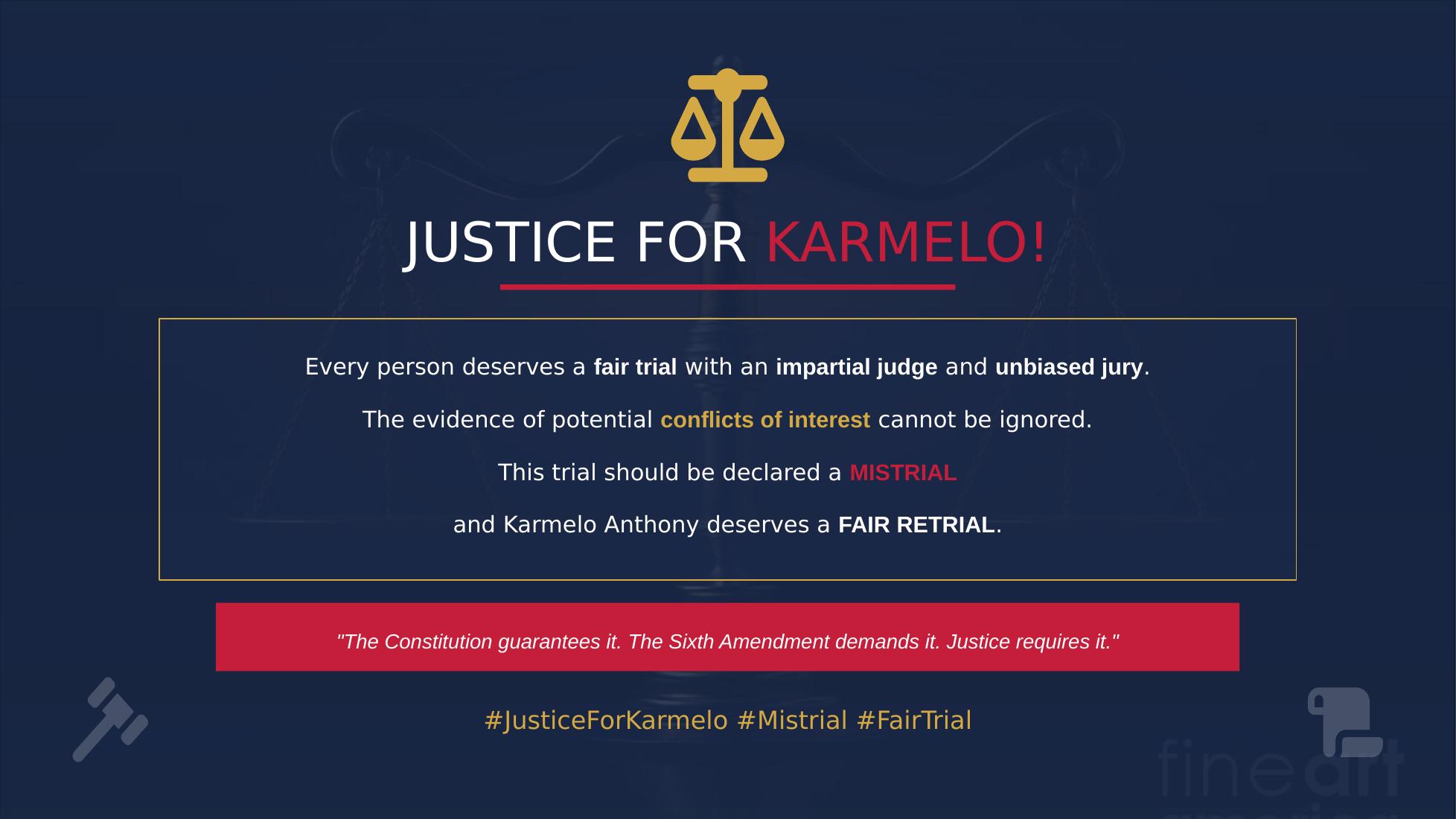
Taken together, supporters argue the evidentiary record, jury exposure, and instructional errors create a substantial likelihood that the verdict does not reflect a fair adjudication — the legal threshold for a mistrial or successful appeal.
File or support amicus briefs in the pending appeal
Demand a public review of the §9.32 jury instructions used at trial
Sign the petition asking the trial court to declare a mistrial
Slideshow — The Mistrial Analysis
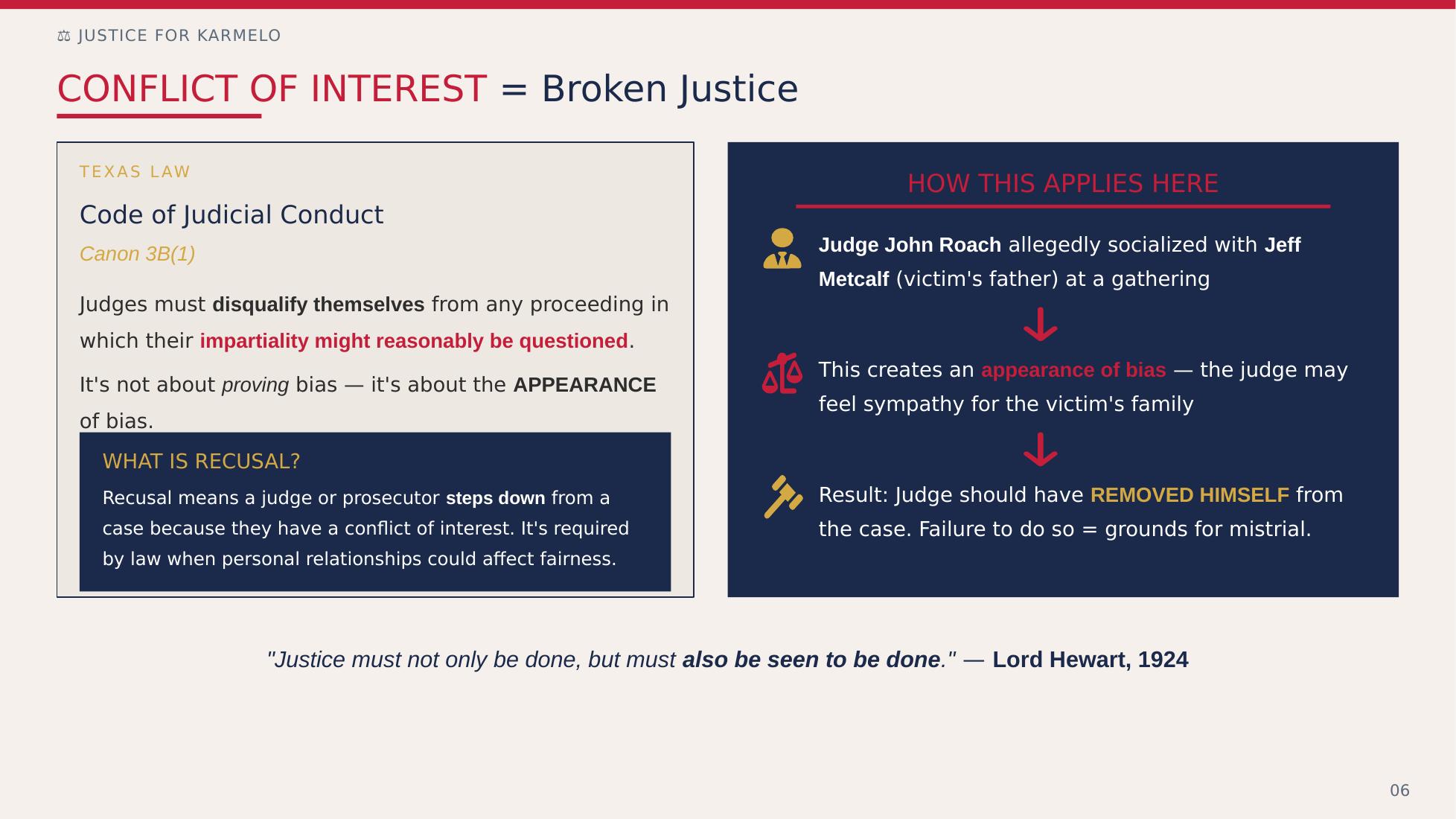
Key slides from the public analysis "This Trial Should Be a Mistrial! — The Karmelo Anthony Case." Full deck: /__l5e/assets-v1/495f7ce8-c2f2-4412-b4da-13259563f58c/karmelo-mistrial-slides.pdf
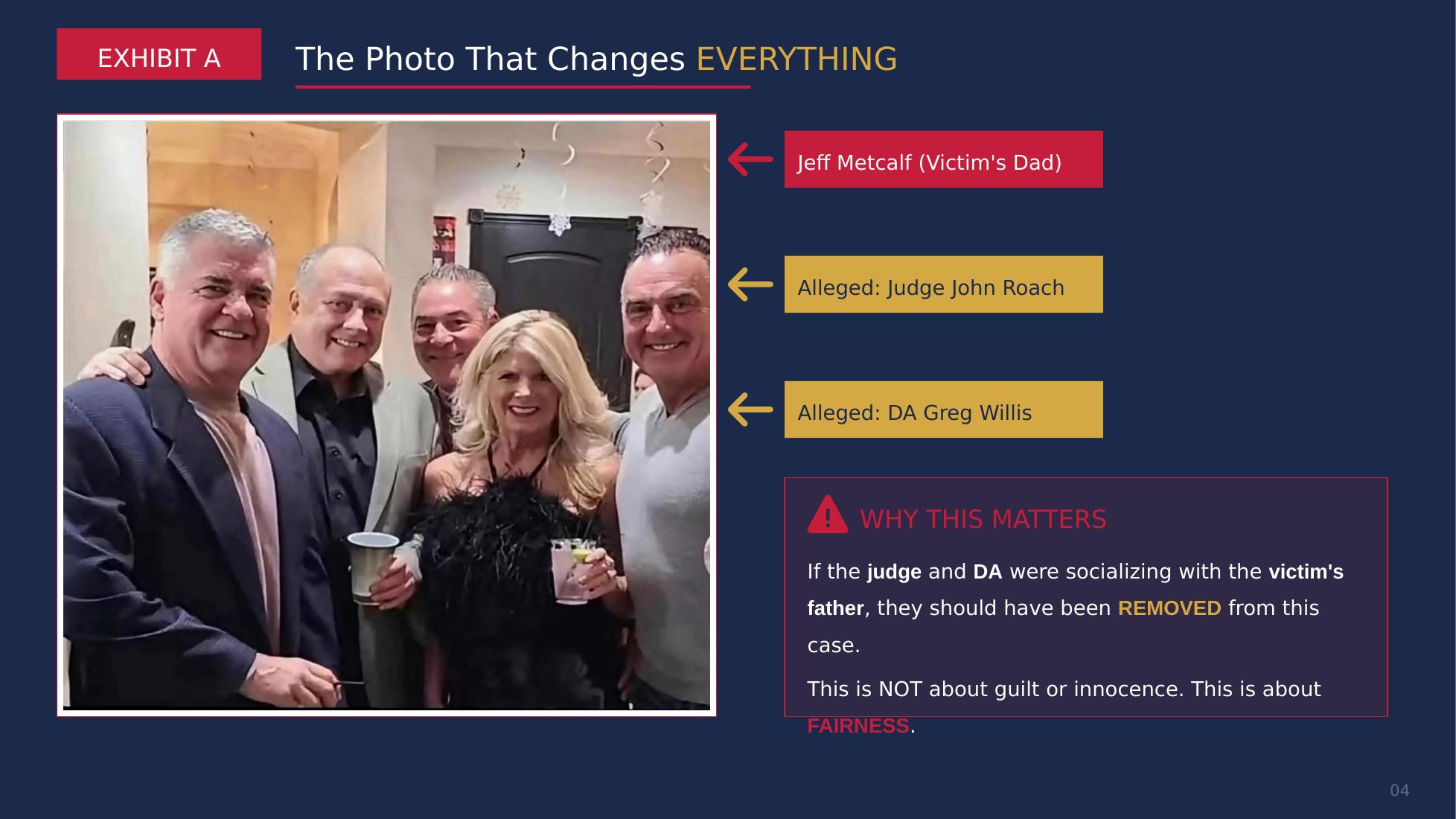
Slide 1 — Cover — The Karmelo Anthony CaseSlide 2 — What HappenedSlide 3 — The Self-Defense ClaimSlide 4 — Evidentiary IssuesSlide 5 — Jury Bias & VenueSlide 6 — Constitutional ViolationsSlide 7 — The SentenceSlide 8 — The Call for a MistrialSlide 9 — Sources & CitationsSlide 10 — How You Can Help
Projected Release Timeline
In custody since May 27, 2026. A 35-year sentence places projected release on May 27, 2061 (12,784 days from intake). First parole-eligible November 26, 2043.
The Petition
We, the undersigned, ask the trial court and reviewing courts to take a second look at the conduct of the trial of Karmelo Sincere Anthony. We believe the public record raises substantial questions about jury exposure, the §9.32 self-defense instructions, and limits placed on cross-examination that — taken together — call for a mistrial or a new trial.